
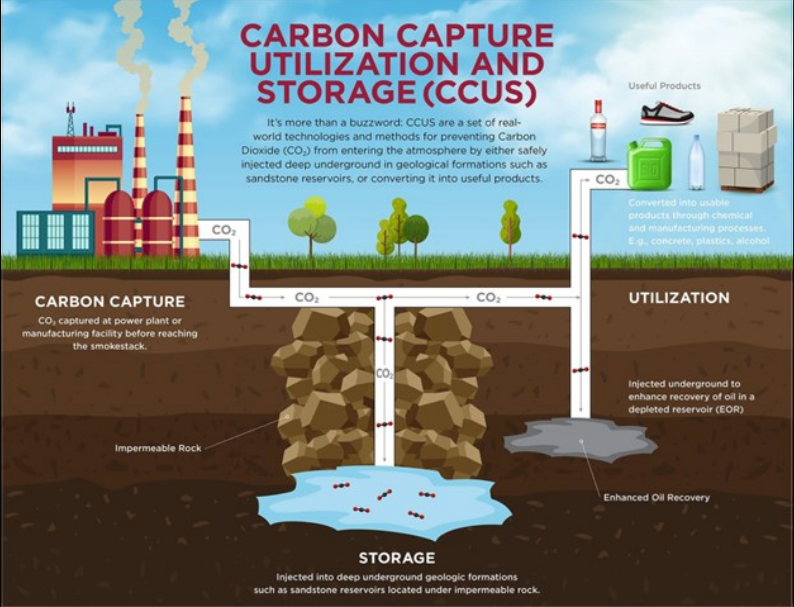
Carbon Capture and Storage (CCS) is rapidly emerging as a key investment target in the Voluntary Carbon Market (VCM), driven by groundbreaking innovations that enhance carbon removal efficiency.
Stanford Develops Ultra-Fast Carbon Capture Technology Using Minerals
A research team at Stanford University has developed a revolutionary technology that dramatically accelerates CO₂ mineralization, a process that typically takes hundreds to thousands of years in nature. This breakthrough, published in Nature, could significantly impact the carbon credit market.
Stanford's method involves synthesizing highly reactive calcium and magnesium-based silicate minerals that rapidly absorb CO₂ from the atmosphere. Inspired by cement production techniques, the team heated silicate minerals with calcium compounds, producing new materials like calcium silicate (Ca₂SiO₄) and magnesium oxide (MgO). These minerals react with CO₂ in as little as two hours, compared to the six months or more required for natural weathering.
Lower Energy Demand, Cost Reduction, and Market Potential
The new process consumes less than 1 MWh of energy per ton of CO₂ captured, making it twice as energy-efficient as conventional Direct Air Capture (DAC) technologies. This efficiency translates to significantly lower carbon capture costs, making it a viable solution for the carbon credit market, where corporations are increasingly seeking reliable CO₂ removal methods.
Industry Adoption and Policy Support
The industrial sector is also embracing accelerated mineral weathering as a scalable carbon removal solution. In March 2024, European carbon removal companies formed the Enhanced Weathering Alliance (EWA) to advocate for policy inclusion of mineral-based carbon sequestration in the EU’s carbon removal framework. The alliance claims that this method could remove up to 4 billion tons of CO₂ annually by 2050.
Stanford's research team, backed by the Stanford Doerr School of Sustainability, is now working on commercialization, having filed an international patent in August 2023. As this technology advances, it is expected to attract major investments in the VCM as a cost-effective and scalable carbon removal solution.